
April Fool’s Day is the annual day of jokes, tricks, or pranks that takes place on the 1st of April each year.
While its origins are somewhat uncertain, the day has become a global phenomenon, with individuals and brands alike getting in on the fun. And while you may have pulled off your fair share of April Fools pranks in real life, have you considered using it within your marketing strategy?
Before you proceed, a word of caution: April Fool’s Day can either be a marketer’s dream or their worst nightmare.
But, when done right, it presents a unique opportunity for brands to engage with their audience in a light-hearted and playful manner, enhancing engagement and memorability.
So, we’re here to tell you how to hit the nail on the head when it comes to April Fooling – as well as what to avoid and what you can bring to your everyday marketing to reap the rewards all year round. Plus, use our handy checklist to make sure it’s right for your brand before you go all in.
What Makes a Good April Fool’s Day Post?
Not every prank is born equal.
Many can completely miss the mark, so it’s important to reflect on these 5 key joke-worthy principles before committing to a social post.
- Maintain relevance to your brand: Ensure that your April Fool’s Day prank aligns with your brand identity and values. It can be jarring to your audience and potentially damaging to your brand if you act completely out of context or if your joke goes against what your company stands for.
- Use an easy-to-understand joke: Keep the joke simple and straightforward, avoiding overly complex ideas that may confuse your audience. If they’re not sure whether you’re joking or not… then you’ve already failed.
- Pay close attention to detail: Invest time and effort into crafting your prank – a poorly thought-out idea is more likely to cause issues. Taking the time to do it properly will also help make the stunt seem almost believable.
- Grab your audience’s attention: Your prank should always be attention-grabbing and memorable. The idea is to leave a lasting impression on your audience.
- Be mindful of the wider social context: Social media can be a wild ride sometimes, and those that fail online do so very publicly. Before posting, consider if your joke could offend anyone, come across in a derogatory way, or mock any current events. If you’re not sure, don’t post!
The best April Fools are those that cleverly weave humour, simplicity, and social awareness into a scroll-stopping moment for their audience to enjoy. While we usually recommend not overthinking your content to avoid perfectionism, we’d recommend that you err on the side of caution with an April Fool.
What NOT to do next April Fool’s Day
While April Fool’s Day presents an opportunity for brands to get creative with their marketing, there are certain topics that should be off-limits.
Avoid jokes or pranks related to sensitive or serious issues – at best your content will tank, but at worst, you could alienate your audience and cause all sorts of problems for your brand if it faced any public backlash.
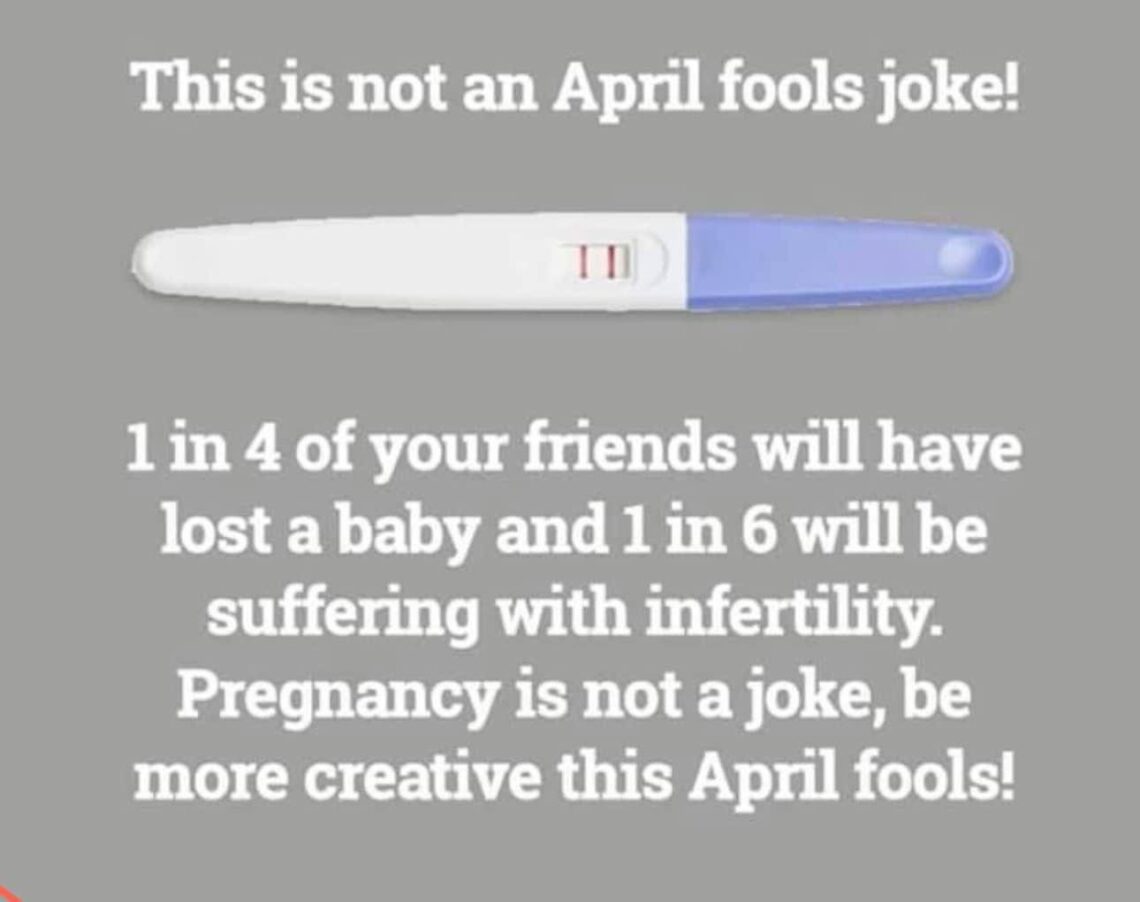
Topics that you absolutely should not use for April Fool material include:
- Fake pregnancy announcements – it’s been said time and again, and yet we still see this kind of post each year. It’s incredibly insensitive to many people who have lost pregnancies or who struggle with infertility, so DON’T DO IT!
- Coming out narratives – another highly personal and sensitive topic, joking about identity is not acceptable. This also applies to trans narratives too.
- Illness and death – we’re not sure we need to explain this one… put simply, it’s a terrible idea.
- Covid, lockdowns, vaccines – still highly contentious topics, these again should be avoided at all costs.
- War – with huge losses to life, security, and global stability, war is absolutely not something to joke about.
- Politics – with the political climate often incredibly unstable and many conflicting opinions on social media, politics is another area to steer clear of.
April Fool’s Day pranks should be light-hearted and fun. With reels and carousels now reaching way beyond your follower count, focusing on the potential impact across all audiences is crucial.
Before sharing, we’d always recommend you check, check, and then check again that your post won’t cross any lines or risk damaging your reputation.
The pros and cons of posting an April Fool joke
Use our quick-fire checklist to help decide whether it’s right for your brand to join in with an April Fool this year:
Pros
☐ Boosts engagement
Fun or surprising posts often get more likes, shares, and comments.
☐ Shows brand personality
Helps your business feel human, playful, and relatable.
☐ Increases visibility
Viral or humorous content can reach new audiences.
☐ Strengthens customer connection
People enjoy brands that don’t take themselves too seriously.
☐ Memorable marketing moment
A clever joke can stick in people’s minds longer than standard promos.
☐ Low-cost content idea
Doesn’t require a big budget – just a bit of creativity.
Cons
☐ Risk of confusion
Customers may take the joke seriously and feel misled.
☐ Potential backlash
If the joke is unclear, insensitive, or ‘too real’, it can annoy or upset people.
☐ Brand mismatch
It doesn’t work well for all industries (e.g. healthcare, legal, and serious services).
☐ Trust concerns
Frequent or poorly executed pranks can damage credibility.
☐ Cultural sensitivity risks
Humour doesn’t land the same for everyone, so it may be misunderstood.
☐ Time-sensitive
If posted too early/late (or not revealed properly), the joke falls flat.
Quick Checks
Before posting, ask yourself:
☐ Is the joke clearly harmless and lighthearted?
☐ Will your audience understand it’s a joke quickly?
☐ Does it align with your brand voice and values?
☐ Could anyone reasonably feel offended, misled, or excluded?
☐ Do you have a clear reveal or follow-up planned?
☐ Are you ready to respond to comments quickly?
And finally, an important question to ask yourself is: can you move quickly to remove or stop a scheduled post if something happens in the days leading up to 1st April?
From Covid to conflict, there have been many occasions when a prank would be hugely inappropriate, so recognising this and being able to take swift action should be an essential part of your April Fool strategy.

Everyday Marketing Inspiration We Can Take from April Fool’s Day
April Fool’s Day can also serve as inspiration for everyday marketing efforts.
By infusing humour into marketing campaigns, you can add personality to your brand and foster a deeper connection with your audience. Humour has the power to make a brand appear more authentic, trustworthy, and relatable, ultimately driving customer engagement and loyalty.
Successfully achieving a well-received ‘funny’ post, whether it’s a simple meme or a well-thought-out joke, serves as a testament to a brand’s understanding of its target audience.
We’d always recommend taking the chance now and again to let loose and have fun with your marketing, to showcase a lighter, more playful side of your brand to see what happens…
To April Fool or not to April Fool – we can’t answer that question
Ultimately, whether or not to take part in April Fools’ Day is a decision only you can make.
We’ve explored both the potential upsides and the possible pitfalls, but the right choice depends entirely on your audience, your tone of voice, and how well a playful approach aligns with your wider brand identity.
April Fools’ Day can be a great opportunity to showcase creativity, humour, and personality – but only if it feels authentic and lands well with the people you’re trying to reach. You know your customers best, so it’s about weighing the risks and rewards, and deciding whether a lighthearted moment will strengthen your connection with them, or not.
In short, while we’d love to give you one, there’s no one-size-fits-all answer – just the one that fits your brand.